
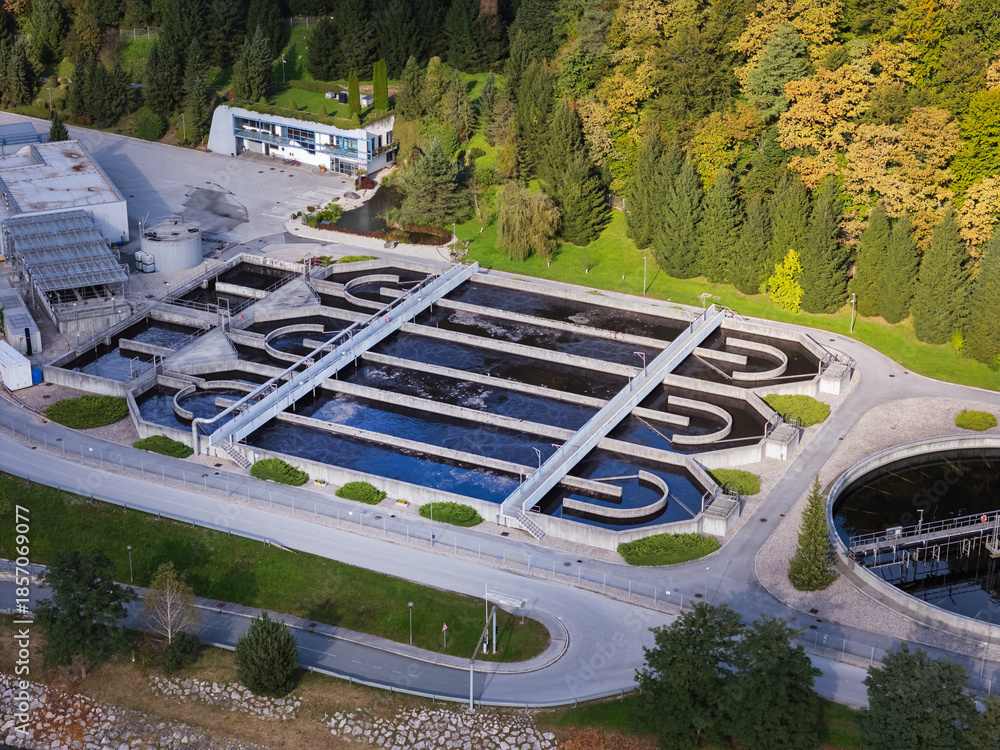
PUREPLUS 5 Micron 10x4.5 Whole House String Wound Sediment Filter for Well Water (2-Pack)

For homeowners running a Big Blue housing (10x4.5 inch), this PUREPLUS string wound cartridge hits the right balance of filtration quality and cost. At 5 microns, it catches fine silt, sand, rust flakes, and sediment that would otherwise stress downstream softeners or carbon filters. String wound construction works by building up layers of polypropylene around a core, trapping larger particles on the outside and progressively finer particles toward the center. This gradient design holds more dirt than a flat media filter before it starts restricting flow, which matters on wells with heavier sediment loads.
Compatibility is broad: it fits several common Big Blue housings including models labeled 84637, WPX5BB97P, PC10, WP10BB97P, and WP5BB97P. At around $15 per filter, the cost of ownership is reasonable for a whole-house stage. The rating of 4.8 out of 5 is encouraging, though the review count is small enough that it is worth watching over time. String wound filters are not washable and should be replaced on schedule, typically every 3 to 6 months on an active well depending on sediment load.
Aquaboon 5 Micron 10x2.5 Sediment Filter for Well Water (6-Pack)

At roughly $4.13 per filter in a 6-pack, Aquaboon delivers the lowest cost per cartridge among the standard-size options here. If you are running a 10x2.5 housing (the most common size for under-sink pre-filters and entry-level whole-house systems), this is a straightforward choice for high-volume sediment removal at a budget-friendly price. It is compatible with some of the most widely owned housings, including models labeled P5, AP110, and WHKF-GD05, which covers a large portion of the installed base.
With a 4.7 rating and 5 published reviews, this sits among the better-reviewed options in the sub-$30 tier. The 6-pack format means you keep replacements on hand without repeated orders, which matters if you are swapping filters every 2 to 3 months due to high sediment. The main trade-off compared to the Big Blue cartridges above is flow capacity: standard 10x2.5 cartridges have a smaller surface area, so they may need more frequent changes in high-sediment wells.
Kinetico 10 Inch 20 Micron Pleated Filter (Part No. K11663)

This is the highest-reviewed product in the roundup by a meaningful margin, with 22 ratings compared to single digits for most others. That review depth matters when you are spending $119.99 on a single cartridge. Kinetico owners will recognize this as the OEM pre-filter for their system's black or amber housings, and going OEM makes sense here: Kinetico systems are engineered to precise flow and pressure specifications, and using a non-certified cartridge risks voiding service agreements or causing poor system performance.
The 20 micron rating is coarser than the 5 micron options elsewhere in this list, which is intentional. This filter sits at the pre-filter stage of a Kinetico system, catching larger debris before water reaches the main treatment stages. It is not designed to capture fine silt or rust particles on its own. If your well has fine sediment, you may need an additional upstream stage. The cost premium is significant compared to generic alternatives, but for Kinetico system owners, the compatibility certainty and documented track record make it the safest choice.
Membrane Solutions 5 Micron 10"x2.5" String Wound Well Water Filter (6-Pack)

Membrane Solutions is a recognized name in water filtration media, and this 6-pack of standard 10x2.5 string wound cartridges is a solid choice for homeowners who want a well-known brand without paying OEM prices. At around $5.50 per filter, it costs a bit more than the Aquaboon 6-pack but still comes in well under single-cartridge pricing. The 4.7 rating with 4 reviews is consistent with other entries in this tier.
The universal fit claim means it targets the widest possible range of standard 10-inch housings, which is useful if you are not sure of the exact brand compatibility. That said, you should always confirm your housing's inner diameter and cartridge length before ordering any cartridge. The string wound construction handles variable sediment loads reasonably well, and having six cartridges on hand means fewer trips to reorder during busy seasons.
PUREPLUS 5 Micron 10"x4.5" Whole House Pleated Sediment Filter for Well Water (2-Pack)
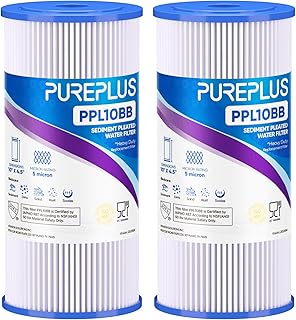
This is the pleated version of the PUREPLUS Big Blue cartridge reviewed at the top of this list. Pleated filters fold the filter media like an accordion, which increases surface area compared to flat or wound alternatives. That extra surface area means slower pressure drop and the potential for a longer service life before a replacement is needed, particularly in wells with moderate sediment. Compatibility spans some popular Big Blue housings, including GE FXHSC, Culligan R50-BBSA, Pentek R50-BB, and DuPont WFHDC3001.
The main reason this ranks below the string wound version is that pleated cartridges in Big Blue housings are often priced for washability, but this listing does not specify whether the cartridge is washable. If you can rinse and reuse it, the cost per use drops significantly. If not, you are paying the same per-filter cost as the string wound version without the proven depth-filtration advantage string wound offers in high-sediment conditions. Confirm with the manufacturer whether rinsing is recommended for your sediment type before committing to a maintenance routine.
PUREPLUS 5 Micron 10"x2.5" Whole House String Wound Sediment Filter (4-Pack)

PUREPLUS offers this standard 10x2.5 string wound cartridge in a 4-pack for $24.99, landing at about $6.25 per filter. That sits between the Aquaboon 6-pack (lower cost per unit) and the Membrane Solutions 6-pack (slightly higher per unit but six total). The compatibility list includes Aqua-Pure AP110, Culligan P5, CFS110, and WFPFC4002 housings, covering a wide range of common under-sink and entry-level whole-house setups.
The string wound construction performs well for gradual sediment loading, and the 5 micron rating is appropriate for most well water sediment pre-filtration. The only reason this ranks sixth is that the single published review makes it harder to assess long-term performance and build quality versus competitors with more feedback. The 4-pack format is also a slightly awkward middle ground between the 2-packs and the more economical 6-packs from other brands.
Sediment Prefilter Well Water Filter Cartridge for Kinetico System (Part No. 9309)

At $138.99 for a single cartridge with one published review, this Kinetico OEM sediment prefilter (Part No. 9309) is the most difficult product to evaluate in this roundup. It is designed as a prefilter stage for specific Kinetico well water treatment systems, and if your system calls for Part No. 9309, this is what you need to order. Substituting with a generic cartridge on a Kinetico system can cause fitment problems or void service coverage, so the OEM designation does matter here.
The 4.0 out of 5 rating is the lowest in this group, and with only one review, there is essentially no statistical basis for drawing conclusions about real-world performance. The price is also notably higher than the K11663 Kinetico pre-filter reviewed above, without a clearly differentiated specification in the available listing data. Before purchasing, confirm with your Kinetico dealer whether Part No. 9309 is the correct cartridge for your system, as there are multiple Kinetico pre-filter configurations and an incorrect order will result in a costly return.
How to Choose the Right Well Water Sediment Filter Cartridge
Cartridge Size: Standard vs. Big Blue
The two most common sediment filter sizes are 10x2.5 inches (standard) and 10x4.5 inches (Big Blue). Standard cartridges fit under-sink pre-filter housings and smaller whole-house units. Big Blue cartridges fit larger housings designed for higher flow rates and greater dirt-holding capacity. If your whole-house flow demand is high, a Big Blue housing and cartridge will maintain pressure better between changes. Check the housing you already own before ordering. The cartridge must match both the diameter and the length of your housing.
Micron Rating: 5 Micron vs. 20 Micron
Micron rating tells you the size of particle the filter captures. A 5 micron filter catches finer particles than a 20 micron filter, but it also clogs faster in high-sediment water. For most well water with visible turbidity, sand, or rust particles, 5 micron is the right starting point. If your well has particularly heavy sediment, consider a two-stage approach: a 20 micron pre-filter upstream to catch large debris, followed by a 5 micron filter to polish the water before it reaches softeners or carbon stages.
String Wound vs. Pleated
String wound cartridges use polypropylene threads wound around a core in graduated layers. Larger particles get caught in the outer layers, finer particles closer to the center. This depth filtration approach gives them good dirt-holding capacity. Pleated cartridges fold a flat filter medium to maximize surface area, which can extend service life and is sometimes washable for reuse. Pleated cartridges tend to maintain flow rates better as they load up, while string wound cartridges offer strong depth filtration for water with variable or mixed particle sizes. For well water, string wound is often the default choice.
What Sediment Filters Do Not Handle
Sediment filters remove physical particles only. They do not remove dissolved iron, manganese, bacteria, nitrates, or chemical contaminants. If your well water has an orange or brown tint that does not settle as sediment, you likely have dissolved ferrous iron, which requires an iron filter or oxidizing filter system. Hydrogen sulfide (rotten egg smell) requires an air injection or chemical feed system. Bacterial contamination requires UV treatment or chlorination. Sediment filtration should be the first stage in any multi-barrier well water treatment plan, protecting downstream equipment. It does not replace testing and treating for the specific contaminants in your water.
Replacement Schedule and Total Cost of Ownership
Buying a 6-pack at $4 to $6 per filter sounds appealing, but only if you actually use all six before they expire in storage. Most polypropylene filter cartridges remain usable for 2 to 3 years in sealed packaging. Active service life depends entirely on your sediment load: some wells need monthly changes, others go 6 months between changes. Track your flow pressure. When pressure at the faucet drops noticeably, the filter is loading up. Set up a reminder to check the filter every 30 to 60 days until you establish your baseline change interval. Then buy packs sized to match that interval.
Frequently Asked Questions
No. A sediment filter only removes physical particles like sand, silt, and rust flakes. Dissolved iron, which causes orange staining and a metallic taste, requires an oxidizing filter, iron filter media, or an air injection system to treat. A basic water test from a certified lab will tell you whether your iron is dissolved (ferrous) or particulate (ferric), which determines the right treatment approach.
It depends on your sediment load. On a clean well with low particulate, cartridges can last 3 to 6 months. On a well with heavy sand or silt, you may need to change filters monthly. The most reliable signal is a drop in water pressure. When pressure noticeably decreases, the filter is loading up and it is time for a change.
Kinetico generally recommends OEM cartridges for their systems, and using a non-OEM part may affect your service coverage. That said, the practical consideration is whether a third-party cartridge with the same dimensions and micron rating will physically fit and perform adequately. If your system is out of warranty and you want to test a lower-cost alternative, confirm the exact dimensions of the OEM cartridge first and compare them to the generic before ordering.
Both are 10 inches long, but the diameter differs. The 2.5 inch diameter is a standard size found in most under-sink and smaller whole-house housings. The 4.5 inch diameter is the Big Blue size, used in larger housings designed for higher whole-house flow rates. Big Blue cartridges have more surface area and dirt-holding capacity, which is useful for homes with high water demand or heavy sediment.
Yes. A basic well water test from a certified lab costs $30 to $150 depending on the panel, and it is the only reliable way to know what is actually in your water. Testing for hardness, iron, pH, nitrates, and coliform bacteria gives you a clear picture of what treatment stages you actually need. Sediment filtration is almost always the right starting point, but testing tells you whether you also need iron treatment, softening, UV disinfection, or other stages downstream.