

Brita Standard Water Filter for Pitchers and Dispensers (6-Pack)

At $23.97 for six filters, this Brita pack delivers the lowest per-filter cost of anything on this list, and the 4.8-star rating across 225 reviews makes it one of the most consistently praised water filtration products at any price. Each filter lasts two months or 40 gallons, which means a six-pack covers a full year of filtered water for a typical household. The filters reduce copper, cadmium, and mercury impurities, addressing the most common tap water concerns in most U.S. cities.
The key detail before buying: these are replacement cartridges, not a standalone filtration system. You need a compatible Brita pitcher or dispenser already in your kitchen. If you have one, this is a straightforward high-value restock. If you need everything in one box, the Brita UltraMax Elite Dispenser reviewed below includes a 27-cup container and one Elite filter as a complete package.
For households that already own a Brita product, there is no better value on this list. The swap process is tool-free, the price per gallon of filtered water is low, and the review count gives genuine confidence. The main limitation is that Brita's Standard format does not specifically target lead; the certification covers copper, cadmium, and mercury. If lead reduction is a priority, ZeroWater's 5-stage replacement filters or the Brita Elite format are worth the higher cost.
BLUERISE 5 Micron 10"x2.5" Wire Wound Whole House Water Filter (6-Pack)

The BLUERISE 6-pack has the highest review count on this entire list at 298 ratings, and the 4.7-star average suggests these cartridges consistently deliver. At $21.99 for six sediment cartridges, this is an economical way to maintain an existing whole-house filter housing. The 5-micron wire-wound construction catches sand, silt, rust, and other particulates before they reach your fixtures, appliances, and any downstream filter stages.
These cartridges fit standard 10"x2.5" filter housings, which are among the most common sizes used in whole-house sediment pre-filtration setups. For readers building or maintaining a complete well water system, our article on the best well water sediment filter cartridges covers compatible housings and multi-stage configurations in more detail. The BLUERISE cartridges slot into that kind of setup as a cost-effective, high-volume option.
The main limitation is the same as any sediment cartridge: these filters address physical particles, not chemical contaminants, chlorine, lead, or taste and odor issues. They are designed as pre-filters in a multi-stage system, not as stand-alone drinking water solutions. If sediment is your primary concern and you already own the housing, the value here is genuinely strong. If you need chemical or taste filtration as well, additional stages downstream are required.
ZeroWater 5-Stage 0 TDS Replacement Filters (6-Pack)

ZeroWater's 5-stage replacement filters are among the most thorough pitcher-format filtration options available under $100. The system is IAPMO certified to reduce lead, chromium, and PFOA/PFOS, which are contaminants that basic activated carbon filters often do not address. The 5-stage process moves water through a coarse filter, a foam layer, a multi-layer activated carbon stage, an ion exchange resin, and a final polishing layer. That ion exchange resin is what sets ZeroWater apart: it strips dissolved solids from the water rather than just capturing particles. For a deeper look at how these different technologies compare, our explainer on RO, carbon, UV, and sediment filters covers what each stage actually does.
At $71.97 for six filters, the per-filter cost is higher than the Brita Standard pack, and these require an existing ZeroWater pitcher or dispenser. You also need to factor in replacement frequency. ZeroWater pitchers include a TDS meter, and the manufacturer recommends replacing the filter when TDS readings rise above 006. In areas where tap water has high dissolved solids, filter life can be shorter than average, which affects the annual cost.
For households in areas with known lead, chromium, or PFOA/PFOS concerns, the IAPMO certification here is meaningful. Standard carbon pitcher filters do not offer that level of verified contaminant reduction. If your priority is simply reducing chlorine taste and basic impurities, the Brita Standard pack at a third of the price handles that adequately. If you want pitcher-format filtration that goes several steps further, ZeroWater is the pick.
GE RPWFE Refrigerator Water Filter

The GE RPWFE is a genuine OEM replacement filter certified to reduce lead, sulfur, and more than 50 other impurities. With a 4.6-star average across 57 reviews, it carries the strongest rating-plus-review combination among the two GE refrigerator filters on this list. GE recommends replacing it every six months, which puts annual maintenance cost at around $100, right at the ceiling of this article's focus.
The RPWFE includes an RFID chip, and this is a critical compatibility detail. Certain newer GE French door refrigerators require the RFID chip to activate the water dispenser; models without this requirement will not benefit from the chip. Check your refrigerator model number against GE's compatibility chart before ordering. If your model does not require the RFID feature, the GE XWFE reviewed below fits many of the same housings at the same price without the chip.
For GE refrigerator owners dealing with chlorine taste, sulfur odors, or wanting documented lead reduction from their built-in dispenser, this is a direct and reliable OEM choice. Third-party alternatives exist at lower prices, but the certified performance claims here come from GE directly, and the 57-review sample provides more confidence in real-world reliability than the XWFE's smaller pool.
GE XWFE Refrigerator Water Filter

The GE XWFE is the non-RFID counterpart to the RPWFE, priced identically at $49.98. It carries the same certification to reduce lead, sulfur, and 50+ impurities, with the same six-month replacement schedule. The key difference is compatibility: the XWFE fits GE refrigerator models that do not require the RFID chip to activate the dispenser. At 40 reviews and a 4.5-star average, the feedback is positive but thinner than the RPWFE's sample.
If you own a GE refrigerator and are unsure which filter applies to your model, check the model number first. GE's website offers a filter finder by model number. Buying the wrong filter is a common and frustrating mistake; the XWFE and RPWFE look similar and are the same price, but they are not interchangeable. The RPWFE's RFID chip will not function in a model designed for the XWFE, and vice versa.
At the same price as the RPWFE, the XWFE is not a budget alternative; it is simply the correct filter for a different set of refrigerators. Filtration performance is comparable between the two, and for the models it fits, it is a reliable OEM replacement. The main practical disadvantage compared to the RPWFE is the smaller review pool, which offers less insight into long-term reliability.
Brita UltraMax Elite Dispenser with Elite Filter, 27-Cup
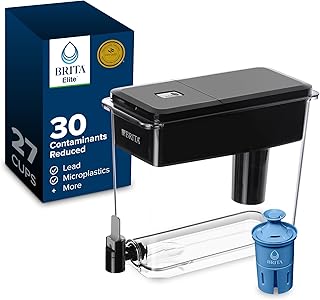
The Brita UltraMax Elite is the only product on this list that includes everything needed to start filtering water immediately: a 27-cup dispenser and one Elite filter already included. Brita states this filter removes 99% of lead, which is a stronger and more specific performance claim than the Standard cartridges elsewhere on this list. At $49.98, the large-capacity container suits families or shared spaces, and the tap-style spout makes dispensing straightforward without lifting a heavy pitcher.
The practical concern is the review count. As of April 2026, this product has only 8 customer reviews. The 4.4-star average is positive, but 8 data points is not enough to call the long-term reliability thoroughly proven. Buyers should weigh that thin track record against an otherwise appealing feature set, particularly if they are deciding between this and a more established product.
For renters, first-time filter buyers, or anyone who does not want to deal with compatibility questions, the UltraMax Elite offers a clean single-purchase solution. The Elite filter format does cost more per replacement than Brita Standard cartridges, so factor that into the long-term picture. If you already own a Brita pitcher and simply need a restock, the Standard 6-pack reviewed above is a considerably better value for the money.
Aquaboon 5 Micron 10 x 2.5 Sediment Filter (50-Pack)

The Aquaboon 50-pack is technically $103.79 rather than under $100, but at roughly $2.08 per cartridge it offers the lowest per-unit cost among the whole-house options on this list. These 5-micron sediment filters fit standard 10"x2.5" housings and are listed as compatible with common filter models including P5, AP110, and WHKF-GD05. For households that cycle through cartridges frequently due to heavy sediment load or well water conditions, buying 50 at once removes the need to reorder every few months.
The compatibility list is broad. If you run a whole-house sediment pre-filter and want to stock up, this pack is sized for low-maintenance operation over an extended period. That said, verifying your housing accepts these cartridges before committing to 50 units is strongly advised. The BLUERISE 6-pack earlier on this list offers a lower-risk way to test fit and performance before scaling up to bulk volume.
The honest concern here is the review count: only 5 reviews as of April 2026. A 4.7-star average is promising, but five data points is a very thin basis for a 50-unit purchase. The BLUERISE 6-pack has 298 reviews at nearly the same rating and represents considerably better-proven reliability. If you want bulk sediment cartridges and are willing to test fit first, this pack can offer strong long-term value. If proven track record matters more, start with the BLUERISE option.
What to Look For in a Budget Water Filter
Identify the Filter Type You Actually Need
The most common mistake buyers make is treating all water filters as equivalent. A pitcher filter cartridge, a refrigerator replacement part, and a whole-house sediment cartridge are completely different products for different applications. Pitcher and dispenser filters are the most accessible: you swap cartridges every one to two months inside a container that sits on your counter or in your refrigerator. Refrigerator filters address the water that comes out of your ice maker and door dispenser, and they only work with specific fridge models. Whole-house sediment cartridges protect your plumbing and downstream appliances from particles, but they do not filter drinking water for chemical contaminants on their own. Our guide on how to choose a home water filtration system walks through these distinctions before you commit to a format.
Look for Third-Party Certification
Marketing claims on filter packaging are not always independently verified. Look for certifications from NSF International or IAPMO, which test filters against established reduction standards for specific contaminants. NSF/ANSI Standard 53 covers health-effects contaminants like lead and volatile organic compounds. Standard 42 covers aesthetic effects like chlorine taste and odor. ZeroWater's IAPMO certification, GE's NSF certification for lead reduction, and Brita's NSF certifications all indicate testing by an independent organization. Without a recognized certification, a filter's performance claims are harder to evaluate, especially at lower price points where corners are sometimes cut.
Calculate the True Annual Cost
The upfront price of a filter cartridge is only part of the equation. Factor in how often each filter needs replacing and what each replacement costs over a full year. The Brita Standard 6-pack at $23.97 covers a full year for a single pitcher user. The GE RPWFE at $49.98 per filter, replaced every six months, puts annual maintenance at around $100. ZeroWater's 6-pack at $71.97 may last less than a year in areas with high total dissolved solids in tap water. Comparing annual cost rather than per-pack sticker price gives a more accurate picture of long-term value.
Match the Filter to Your Water Quality Concern
Not every household has the same issue. If your water has noticeable chlorine taste or odor, a basic activated carbon pitcher filter handles that well. If you live in an older home with aging pipes and are concerned about lead, you need a filter with a specific lead-reduction certification, not just any carbon cartridge. If you are on well water with visible sediment or discoloration, a whole-house pre-filter tackles that before it reaches your fixtures and appliances. Many local utilities publish annual water quality reports identifying common local contaminants, which is a practical starting point before choosing a filter type.
Verify Compatibility Before Ordering
Compatibility is especially critical for refrigerator filters. GE alone makes multiple part numbers (XWFE, RPWFE, MSWF, and others) that look similar but are not interchangeable. Using the wrong filter can prevent the dispenser from functioning, or leave the filter improperly seated so it does not filter effectively. For pitcher and dispenser filters, Brita Standard cartridges fit Brita products only, and ZeroWater filters fit ZeroWater pitchers only. For whole-house sediment cartridges, verify the housing dimensions (10"x2.5" is common but not universal) before buying in bulk.
Frequently Asked Questions
No. Brita and ZeroWater use different filter formats that are not cross-compatible. Brita Standard cartridges fit Brita pitchers and dispensers only. ZeroWater replacement filters fit ZeroWater pitchers and dispensers only. The two brands cannot share cartridges.
Check your refrigerator model number, then use GE's filter compatibility tool on their website. The RPWFE is designed for newer GE French door models that require an RFID chip to activate the water dispenser. The XWFE fits GE models that do not require the RFID feature. Using the wrong filter can prevent the dispenser from working at all, so confirming the model match before ordering is worth the extra step.
No. Sediment filters like the BLUERISE and Aquaboon cartridges capture physical particles such as sand, silt, and rust flakes, but they do not reduce chlorine, lead, chemical contaminants, or taste and odor issues. They work best as pre-filters in a multi-stage system where additional downstream stages handle chemical and taste concerns.
Brita Standard filters are rated for two months or 40 gallons, whichever comes first. ZeroWater 5-stage filters do not carry a fixed gallon rating because filter life depends heavily on your tap water's total dissolved solids level. ZeroWater pitchers include a TDS meter to help track when replacement is needed. Replacing filters on schedule matters because exhausted filters can lose their contaminant reduction effectiveness while still allowing water to flow normally.
For most city water users concerned about taste, chlorine, and common contaminants like copper and cadmium, a pitcher filter under $50 is genuinely effective. If you need broader certified reduction of lead, chromium, or PFOA/PFOS, ZeroWater's 5-stage system still falls under $100 for a six-pack of replacement filters. Full whole-house reverse osmosis or multi-stage under-sink systems cost significantly more but filter all water in the home rather than what passes through a single pitcher or refrigerator line.